
Sustainability Compliance in Europe: Trends in Recyclable PET Strapping for Industrial Packaging
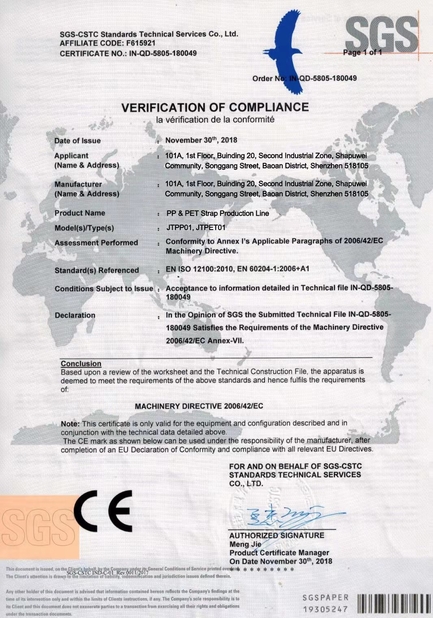
As environmental regulations on packaging waste and carbon emissions continue to tighten across Europe, industrial packaging materials are shifting from a “strength-first” approach to a balance between compliance and performance. In this context, PET strapping is increasingly adopted as a recyclable and high-strength solution for pallet securing and heavy-duty packaging.
Key Compliance Requirements in the European Market
Industrial packaging materials in Europe are generally expected to meet the following criteria:
- Recyclability in line with circular economy policies
- Load stability during long-distance and cross-border transportation
- Material safety, including non-toxic and odorless characteristics
- Machine compatibility for automated strapping systems
Manufactured from polyethylene terephthalate, PET strapping aligns with recyclability requirements while maintaining consistent mechanical performance.
Application of PET Strapping Across Key Industries
Building Materials and Ceramics (Heavy Load & Impact Resistance)
Transporting construction materials often involves vibration and shock, increasing the risk of load shifting.
PET strapping supports this application with:
- Tensile strength ranging from >150kg to >850kg
- Resistance to impact and vibration during transit
Typical use cases include bricks, tiles, and stone packaging.
Timber and Paper Industries (Large Volume & Uneven Loads)
Products such as lumber and paper rolls require both flexibility and strength due to uneven weight distribution.
PET strapping offers:
- Width options from 9mm to 19mm
- Thickness range from 0.5mm to 1.2mm
This allows adaptation to different load profiles.
Automated Logistics and Warehousing (Continuous Operation)
In automated packaging environments, material continuity directly affects efficiency:
- Coil length ranges from 650m to 3400m per 20kg roll
- Reduced frequency of roll changes supports continuous operation
Compatible with both handheld tools and automatic strapping machines.
Selection Guidelines for European Buyers
To ensure proper application, selection should be based on:
- Load weight → matching tensile strength (150kg–850kg)
- Pallet size and configuration → selecting width (9–19mm)
- Transport conditions → temperature variations and handling
- Equipment type → manual or automatic strapping systems
A parameter-based selection approach helps maintain both compliance and operational stability.
Conclusion
With increasing regulatory pressure in Europe, PET strapping is evolving from an alternative material to a mainstream industrial packaging solution. Its recyclability, stable tensile performance, and compatibility with automated systems position it as a practical option for modern logistics and packaging operations.
![]()


